Citric acid: anhydrous vs monohydrate, grades and industrial uses
Anhydrous or monohydrate, food or technical grade: how to choose citric acid, where it is used from beverages to descaling and stainless steel passivation, and how to store it.
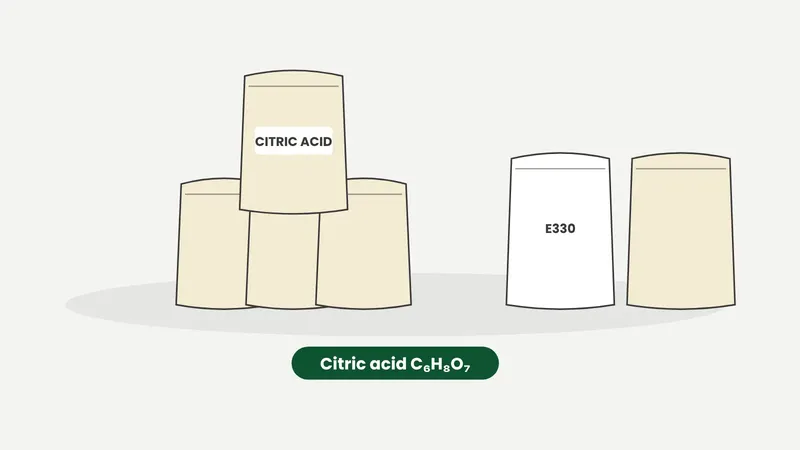
Short answer: citric acid is a mild, biodegradable organic acid made by fermentation. It is sold as anhydrous (no water of crystallisation, CAS 77-92-9) or monohydrate (one molecule of water, CAS 5949-29-1) crystals, in food grade (E330) and technical grades. Both do the same job; anhydrous carries about 9% more acid per kilo, and monohydrate is often preferred in some food and pharma processes. It is not dangerous goods for transport, but it irritates eyes and must be kept dry.
Anhydrous or monohydrate?
| Anhydrous | Monohydrate | |
|---|---|---|
| Formula | C₆H₈O₇ | C₆H₈O₇·H₂O |
| Molar mass | 192.1 g/mol | 210.1 g/mol |
| Acid per kg | 1.00 kg | about 0.91 kg |
| To replace 1 kg anhydrous | – | about 1.09 kg |
| Typical use | Dry blends, tablets, powders, most industrial uses | Some beverages, pharma and processes that want the hydrate |
Rule of thumb: if a formulation was written for monohydrate and you switch to anhydrous, use about 9% less by weight (multiply by 0.91), and the other way round multiply by 1.09.
Food or technical grade?
- Food grade (E330) meets food additive specifications (purity, heavy metals, sulfated ash, oxalate) and comes with the certificates food plants need. Use it for anything that touches food, drink, cosmetics or medicine.
- Technical grade is used for cleaning, descaling, construction chemicals and oilfield work, where those certificates are not needed.
When in doubt, ask for food grade: the price difference is usually small.
What citric acid is used for
- Food and beverage: acidulant and flavour in soft drinks, juices and sweets; pH control; antioxidant synergist; and a chelating agent that ties up metals that spoil colour and flavour.
- Detergents and cleaners: a builder and descaler in dishwasher and laundry products, often replacing phosphates, and the active ingredient in many kettle and bathroom descalers.
- Industrial descaling and CIP: removing limescale and milkstone from heat exchangers, boilers, RO membranes and dairy lines, where its mildness compared with mineral acids protects equipment.
- Stainless steel passivation: citric acid solutions are an accepted alternative to nitric acid for passivating stainless steel after fabrication, and they are safer to handle.
- Oil and gas: iron control in acid stimulation, where it keeps dissolved iron from precipitating.
- Construction: a set retarder in gypsum plasters and some cement products.
- Personal care and pharma: pH adjustment and effervescent tablets (with bicarbonate).
Storage and handling
- Citric acid is hygroscopic: it picks up moisture and cakes. Store bags off the floor, in a dry, covered store, and reseal opened bags. Saudi coastal humidity in summer is the main risk.
- It is an eye irritant: wear goggles and gloves when handling powder and making solutions, and avoid breathing dust.
- Solutions are acidic and attack carbonate stone, concrete and some metals over time; store them in plastic or stainless steel.
- Keep away from strong oxidisers and strong bases.
Always follow the product's SDS.
What to ask for when buying
- Anhydrous or monohydrate, and the mesh size (fine granular, granular, powder) if your process needs it.
- Food grade or technical grade, with the certificates you need (CoA for each batch; halal certificate for food use).
- Quantity and pack: 25 kg bags on pallets, or 1 t jumbo bags.
Buying citric acid in Saudi Arabia
Nord Chemicals, part of Nordinfini, holds citric acid in stock in Dammam for quick delivery across Saudi Arabia and the GCC, with a safety data sheet and a certificate of analysis for each batch. See everything we supply for food and beverage, see the full in-stock list, or request a quote with the grade, quantity, pack and delivery city.
Sources
- PubChem, Citric acid (CID 311) and Citric acid monohydrate.
- JECFA and EU food additive specifications for E330.
- ASTM A967, chemical passivation treatments for stainless steel parts (citric acid methods).
Need this chemical in Saudi Arabia or the GCC?
Nord Chemicals supplies, manufactures and blends industrial chemicals from Dammam, for nine industries across Saudi Arabia and the GCC.
See Nord Chemicals Ask on WhatsAppRelated articles
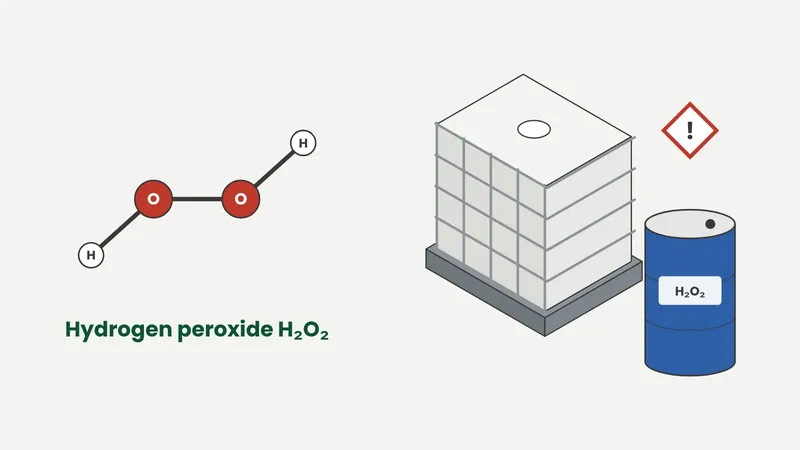
Hydrogen peroxide: grades, uses and safe storage (35%, 40%, 50%, 60%)
35%, 40%, 50% or 60%? What hydrogen peroxide is used for, which tank materials are safe, how to keep it stable in Saudi summer heat, and what to ask for when buying.
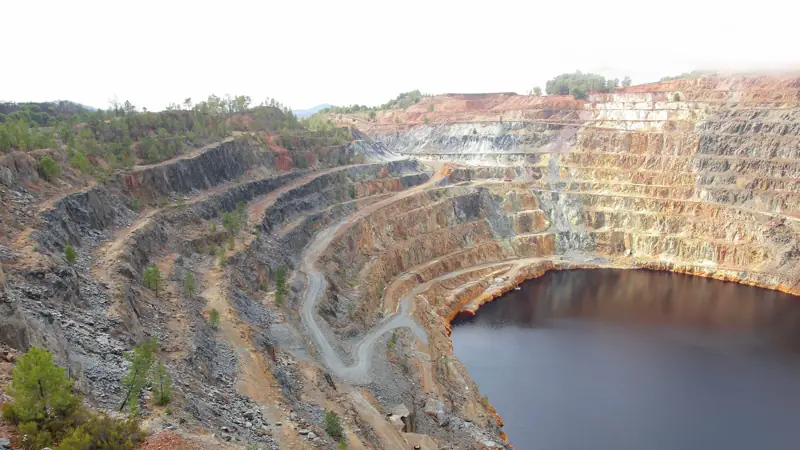
Flotation reagents for gold and copper: xanthates, frothers, depressants and activators
How a flotation circuit uses collectors such as PAX and SIBX, frothers such as MIBC, depressants, activators and pH modifiers, and how to choose between them.

Water treatment chemicals: coagulants, flocculants, antiscalants and biocides explained
Which chemical does which job in a water or wastewater plant: clarification, RO membrane protection, disinfection, boilers and cooling towers, with what to check before you buy.