
Pre-insulated ducts vs galvanised steel ductwork: weight, leakage, space and cost
Why more Saudi projects are moving from lagged GI ducts to pre-insulated panels, and where galvanised steel still makes sense.
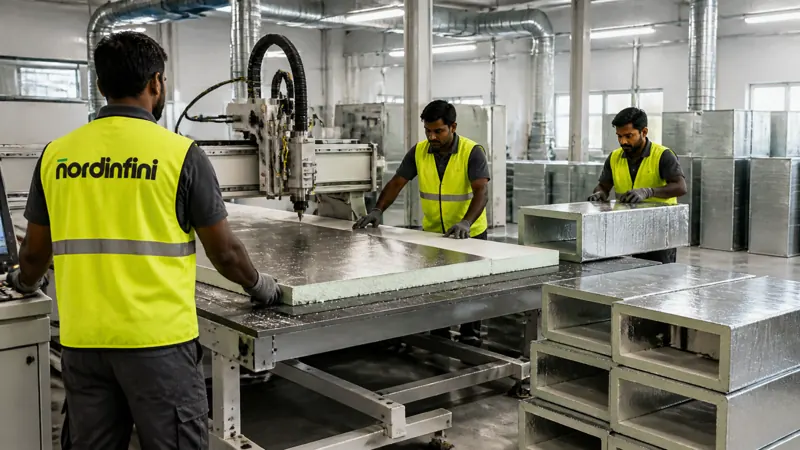
Short answer: for most air-conditioning ductwork inside buildings, pre-insulated panels win on weight, speed, airtightness and ceiling space. Galvanised steel still makes sense for kitchen extract, smoke extract, very high pressures, and places where ducts will be knocked about.
How each is built
Galvanised steel (GI) ductwork is folded from sheet steel, joined with flanges or slips, hung from the slab, sealed, and then insulated as a separate trade, usually with mineral wool or elastomeric foam and a vapour barrier.
Pre-insulated ductwork is fabricated from rigid phenolic or PIR foam panels faced with aluminium on both sides. The panel is the duct and the insulation at once, so it goes up in a single fix.
Weight
This is the biggest difference you feel on site. Kingspan's published comparisons put phenolic pre-insulated ductwork at up to 70–75% lighter than galvanised steel ductwork lagged with mineral fibre. Lighter ducts need fewer and lighter hangers, are safer to lift at height, and can be the deciding factor where the structure has little spare capacity, for example in refurbishments.
Installation time and labour
With GI ducts, two crews visit every metre: one to hang the duct, another to lag it. Pre-insulated ducts arrive fabricated and insulated, so there is one crew and one visit. Long sections (up to 4 m for PalDuct PIR panels) mean fewer joints to make at height.
Air leakage
Every leak in a duct is cooled air that never reaches the room. Pre-insulated systems are glued and sealed along every seam, and Kingspan reports that KoolDuct ductwork can reach the tighter European leakage classes (C and D) and SMACNA's Class 3. Well-made GI ductwork can be tight too, but it relies on site sealing of every joint and is harder to keep tight over long runs.
Ceiling space
Because there is no lagging to wrap around the duct, pre-insulated ducts can be fixed flush against the slab or wall. Kingspan notes savings of up to 200 mm in one dimension. In tight ceiling voids, that can be the difference between a design that fits and one that does not.
Indoor air quality
Phenolic and PIR cores are fibre-free and the inner surface is aluminium, so there are no loose fibres to enter the airstream, and the smooth face is easy to clean.
Cost
Panel material can cost more per square metre than thin galvanised sheet, but the comparison that matters is installed cost: material, fabrication, hangers, insulation, labour and time. In a study for Kingspan, Rider Levett Bucknall found KoolDuct's installed cost could be up to 22% lower than insulated metal ductwork on the cases they modelled. Your project will differ, so compare full installed prices, not panel prices.
Where galvanised steel is still the right answer
- Kitchen extract (grease, high temperatures, fire risk)
- Smoke extract and fire-rated ductwork that must meet specific fire-resistance tests
- Very high pressures or velocities beyond the panel's rating
- Exposed areas where ducts may be hit by vehicles or equipment, unless protected
- Specifications that simply require it
Where Nord WPI fits
We fabricate Kingspan PalDuct pre-insulated ductwork in-house in Dammam on our own CNC line, and supply and install it across Saudi Arabia. Send us your duct drawings and we will return a pre-insulated alternative with weights and a full installed price. Try the duct selector to size runs in minutes.
Sources
- Kingspan knowledge articles, Weight comparisons of ductwork, Benefits of pre-insulated ductwork and Significant savings possible with KoolDuct (Rider Levett Bucknall research).
- Kingspan, PalDuct PIR System technical data sheet (Middle East).
- SMACNA news, Kingspan KoolDuct: the ultimate pre-insulated ductwork system (Kingspan content).
Size your pre-insulated ducts
Enter airflow and run lengths. We size the ducts, suggest PalDuct PIR or Phenolic, and fabricate them in Dammam.
Open the duct selectorRelated articles
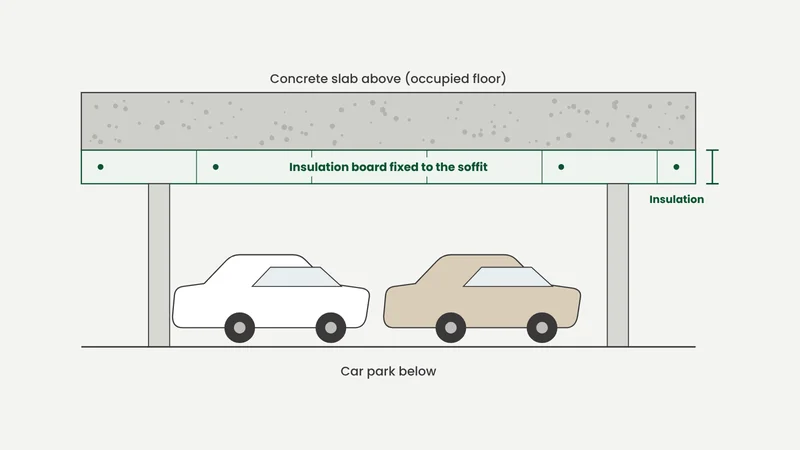
Car park soffit insulation: how thick does it need to be?
A bare 200 mm concrete slab loses heat at a U-value of about 3.4 W/m²K. Here is how much soffit insulation it takes to reach common targets — and why the board you choose changes the answer.
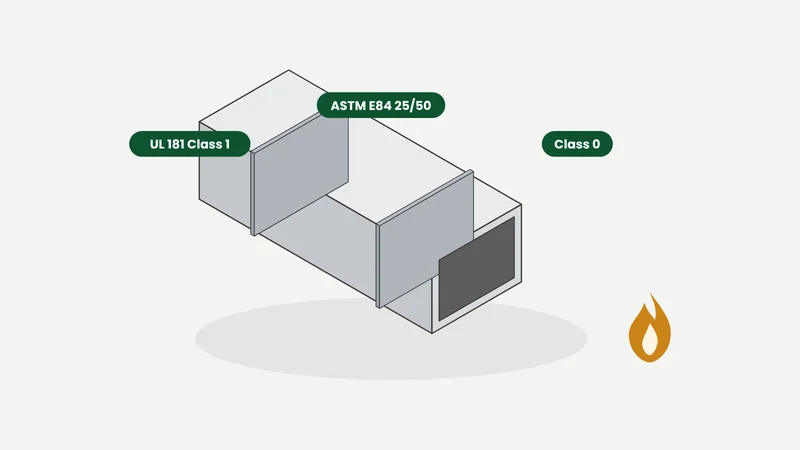
UL 181, ASTM E84 and Class 0: duct fire ratings explained
The fire tests behind duct specifications in the Gulf, what each one actually measures, and what to ask for in a submittal.
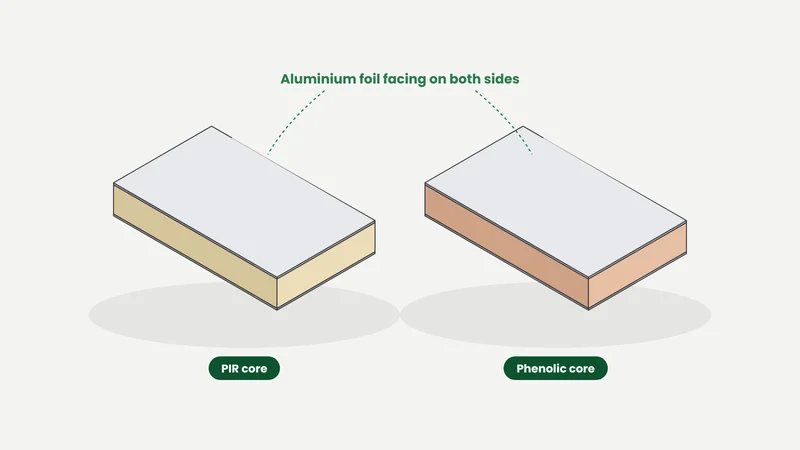
Phenolic vs PIR ducts: what is the difference, and which should you specify?
Both are rigid foam pre-insulated ducts. They differ in chemistry, fire behaviour, thermal performance and price. A plain guide for consultants and contractors.