
UL 181, ASTM E84 and Class 0: duct fire ratings explained
The fire tests behind duct specifications in the Gulf, what each one actually measures, and what to ask for in a submittal.
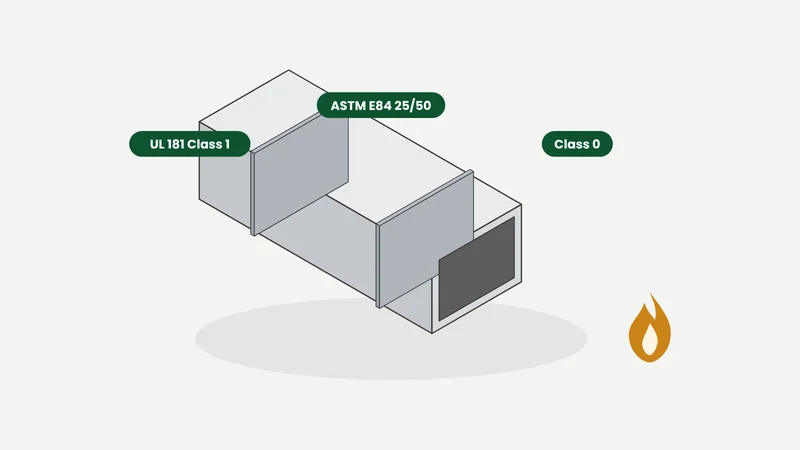
Short answer: ASTM E84 and BS 476 test how a material's surface spreads flame and makes smoke. UL 181 tests a finished air duct as a product, with fire tests plus mechanical and durability tests. A Gulf specification may ask for one, two or all three, and the evidence you submit must match the wording.
ASTM E84 (UL 723): the tunnel test
A sample lines the roof of a 7.3 m tunnel and is exposed to a gas flame. The test gives two numbers:
- Flame spread index (FSI): how fast flame travels along the surface.
- Smoke-developed index (SDI): how much smoke it gives off.
Class A means FSI 0–25. For duct materials and coverings, US mechanical codes and NFPA 90A also limit smoke to 50 or less. So "25/50" is the figure to look for.
BS 476 Parts 6 and 7: "Class 0"
The older British test series still appears in many Gulf specifications.
- Part 7 measures surface spread of flame and gives Class 1 to 4 (Class 1 is best).
- Part 6 measures fire propagation and gives an index.
A material that achieves Class 1 in Part 7 and low enough Part 6 indices is called Class 0. Class 0 is a national classification from UK building regulations, not a test of its own.
UL 181: the air duct standard
UL 181 covers factory-made air ducts and air connectors. Rather than testing a flat sample, it tests duct material as a duct: surface burning, flame penetration, burning, corrosion, mould growth, puncture, impact, static load, erosion, pressure, collapse and leakage. A material that passes is listed as a Class 0 or Class 1 Air Duct.
The International Mechanical Code (on which the Saudi mechanical code, SBC 501, is based) requires non-metallic ducts to be Class 0 or Class 1 duct material tested to UL 181. That is why UL 181 listing is often the deciding clause for pre-insulated ducts.
Euroclass (EN 13501-1)
European products are classified from A1 (non-combustible) to F, with smoke (s1–s3) and droplet (d0–d2) sub-classes. Kingspan's KoolDuct, for example, is declared B-s1,d0 on its exposed foil side. You will see Euroclasses on European data sheets, but Gulf specifications more often ask for UL or BS results.
What to ask for in a duct submittal
- The listing or test report itself, not just a brochure line. For UL 181, check the listing on UL Product iQ.
- The product name and thickness tested. A 20 mm and a 30 mm panel are different products.
- The facing tested. Results apply to the facing and core combination tested.
- The date and lab of each report.
- Fabrication compliance: a statement that the ductwork is fabricated to the manufacturer's guidelines, because a listed panel made into a badly built duct is not a listed duct.
Where Nord WPI fits
We fabricate Kingspan PalDuct PIR and PalDuct Phenolic ductwork in-house in Dammam and prepare full submittals with the manufacturer's test evidence and our fabrication method statement. Request a submittal pack or see our HVAC ducts.
Sources
- UL Solutions, Air duct company sees UL certification product advantage (UL 181 in the Middle East).
- Kingspan, PalDuct PIR System technical data sheet (Middle East) (BS 476, ASTM E84 classifications).
- NBS Source, Kingspan KoolDuct System (Euroclass, BS EN 13403).
- Kingspan Insulation LLC, PalDuct phenolic UL 181 panel line announcement.
Size your pre-insulated ducts
Enter airflow and run lengths. We size the ducts, suggest PalDuct PIR or Phenolic, and fabricate them in Dammam.
Open the duct selectorRelated articles
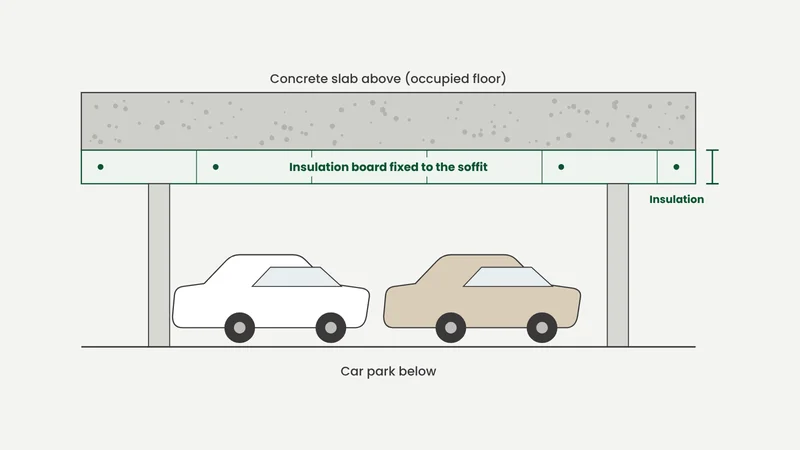
Car park soffit insulation: how thick does it need to be?
A bare 200 mm concrete slab loses heat at a U-value of about 3.4 W/m²K. Here is how much soffit insulation it takes to reach common targets — and why the board you choose changes the answer.
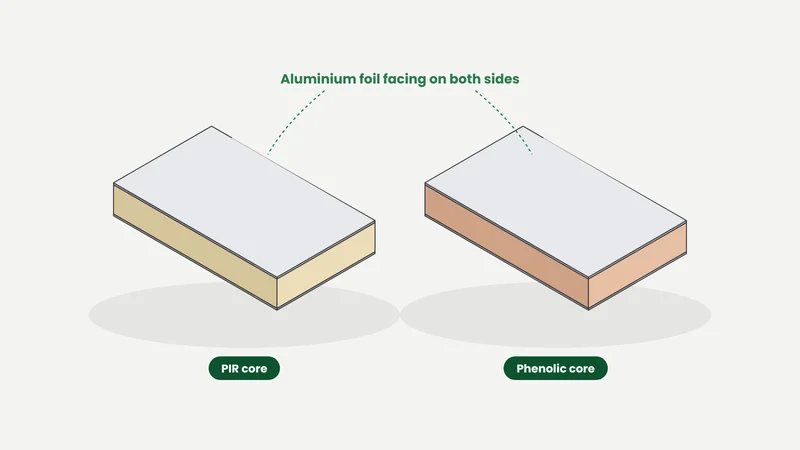
Phenolic vs PIR ducts: what is the difference, and which should you specify?
Both are rigid foam pre-insulated ducts. They differ in chemistry, fire behaviour, thermal performance and price. A plain guide for consultants and contractors.
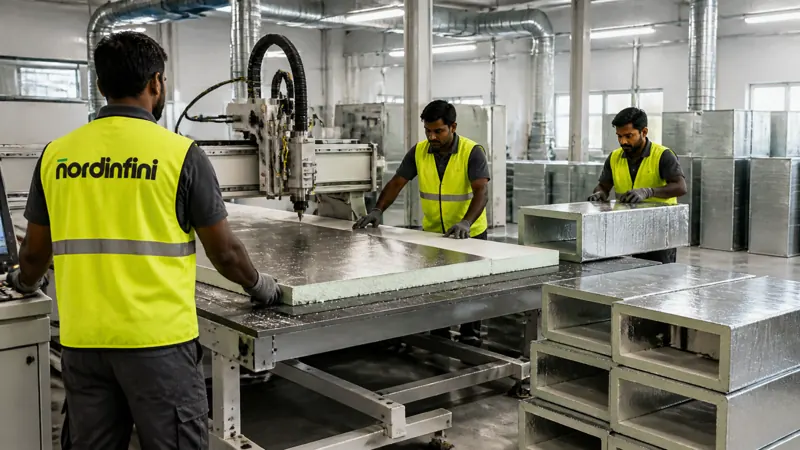
Pre-insulated ducts vs galvanised steel ductwork: weight, leakage, space and cost
Why more Saudi projects are moving from lagged GI ducts to pre-insulated panels, and where galvanised steel still makes sense.