
Phenolic vs PIR ducts: what is the difference, and which should you specify?
Both are rigid foam pre-insulated ducts. They differ in chemistry, fire behaviour, thermal performance and price. A plain guide for consultants and contractors.
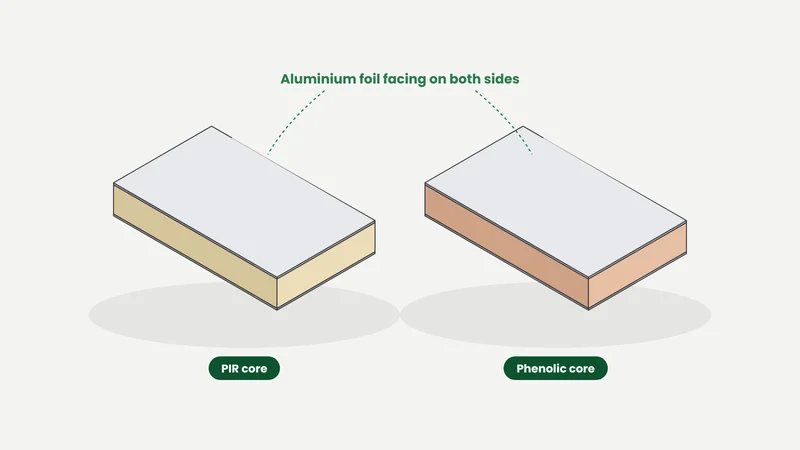
Short answer: specify phenolic where fire performance and the thinnest possible duct matter most (high-end hotels, hospitals, projects that demand UL 181 listing). Specify PIR for everyday comfort-cooling ductwork where the specification allows it and budget matters. Both are far lighter and tighter than lagged galvanised steel.
Two foams, two chemistries
Phenolic foam is made from phenol-formaldehyde resin. It is a thermoset: once cured, it does not melt. When exposed to flame it chars rather than drips, which is why phenolic boards and duct panels do well in fire tests and produce little smoke.
PIR (polyisocyanurate) foam is made from isocyanates and polyols, with an excess of isocyanate that creates a more heat-stable ring structure than ordinary polyurethane (PUR). It is also a thermoset and also chars, but it typically does not reach the same fire and smoke results as phenolic.
Both are closed-cell, fibre-free foams. Neither sheds fibres into the airstream, unlike fibreglass duct board or mineral-wool lagging.
Thermal performance
Both foams have low thermal conductivity (lambda), so they insulate well in thin walls:
- Kingspan's PalDuct PIR panels are declared at 0.020 W/m·K.
- Kingspan's phenolic duct products are declared from about 0.019 to 0.022 W/m·K, depending on the product and test temperature.
In practice the difference between the two cores is small at the same thickness. What matters more is choosing enough thickness for the job (20 mm vs 30 mm panels) and fabricating the joints well, because air leakage and badly sealed seams waste far more energy than a few thousandths of a W/m·K.
Fire performance
This is where they separate.
- Phenolic duct systems such as Kingspan KoolDuct and PalDuct Phenolic are UL 181 listed, the US standard for factory-made air ducts that many Gulf consultants call for.
- PalDuct PIR carries BS 476 Part 6 Class 0 / Part 7 Class 1 and ASTM E84 Class A ratings, which meet many specifications written around those tests.
So the choice often comes down to one line in the specification. If it says UL 181 listed, you are in phenolic territory. If it says Class 0 or Class A, read it carefully: PIR may comply.
Strength and handling
Both cores are rigid enough to make self-supporting ducts with the right reinforcement (tie rods or bars on large sections). PalDuct PIR's 30 mm panel (30P200) is rated for higher pressures and speeds than the 20 mm panel. For the largest sections or highest pressures, follow the fabrication guideline for reinforcement spacing.
Cost
PIR panels are generally the lower-cost option per square metre. Phenolic costs more, and you pay for its fire performance and premium positioning. On many jobs the installed cost difference is smaller than the panel price difference, because fabrication and installation labour are the same.
A simple way to choose
- Read the fire clause. UL 181 listing required → phenolic.
- Check the building. Hotels, hospitals, high-rise, places where people sleep → lean phenolic.
- Check pressure and velocity. High-velocity mains → thicker panels (30 mm), either core.
- Check exposure. Outdoors or on roofs → a pre-clad or protected system.
- Everything else (offices, schools, retail, villas with standard comfort cooling) → PIR is usually a sound, economical choice.
Where Nord WPI fits
We fabricate both PalDuct PIR and PalDuct Phenolic ductwork in-house in Dammam on our own CNC line. Send us the layout and we will price both cores side by side so the decision is about facts, not guesswork. Start with our duct selector, or read about PalDuct PIR and PalDuct Phenolic.
Sources
- Kingspan, PalDuct PIR System technical data sheet (Middle East).
- NBS Source, Kingspan KoolDuct System and Kingspan Kooltherm Duct Insulation product data.
- SMACNA news, Exploring phenolic ductwork systems for energy efficiency (Kingspan content).
Size your pre-insulated ducts
Enter airflow and run lengths. We size the ducts, suggest PalDuct PIR or Phenolic, and fabricate them in Dammam.
Open the duct selectorRelated articles
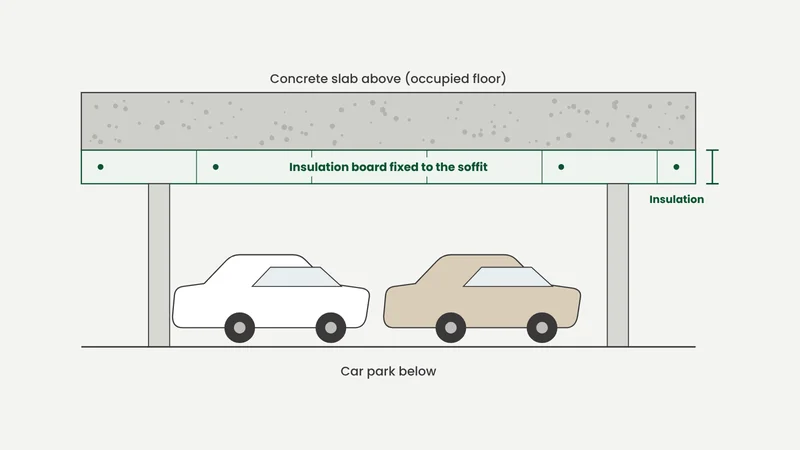
Car park soffit insulation: how thick does it need to be?
A bare 200 mm concrete slab loses heat at a U-value of about 3.4 W/m²K. Here is how much soffit insulation it takes to reach common targets — and why the board you choose changes the answer.
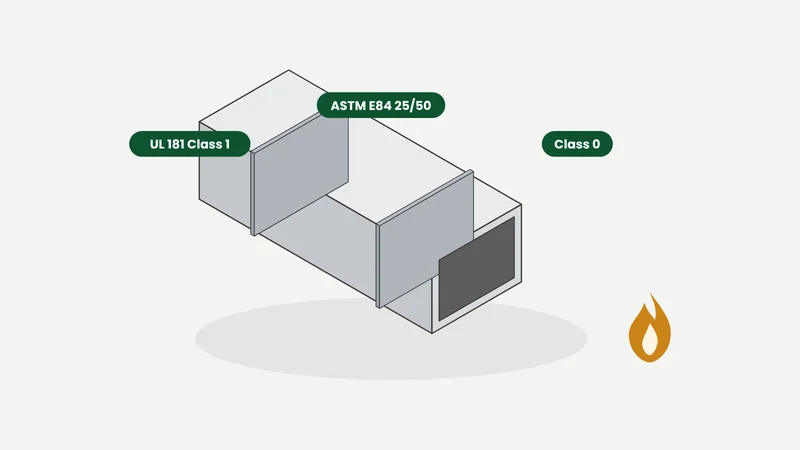
UL 181, ASTM E84 and Class 0: duct fire ratings explained
The fire tests behind duct specifications in the Gulf, what each one actually measures, and what to ask for in a submittal.
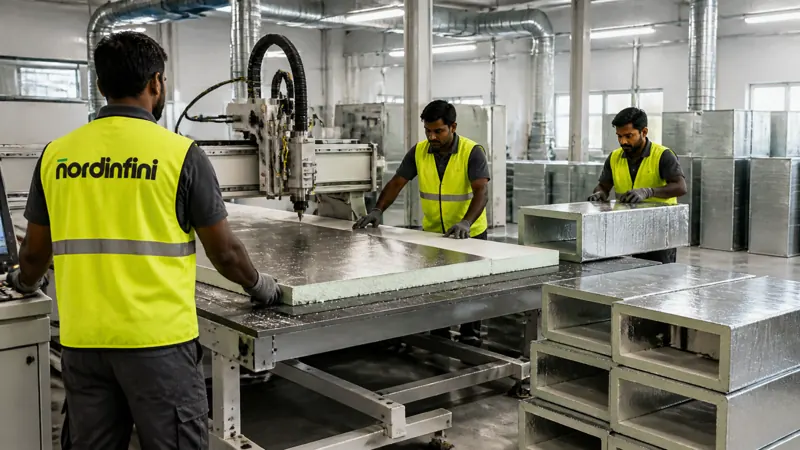
Pre-insulated ducts vs galvanised steel ductwork: weight, leakage, space and cost
Why more Saudi projects are moving from lagged GI ducts to pre-insulated panels, and where galvanised steel still makes sense.