Nitric acid: concentrations, industrial uses and safe storage
From fertilisers to stainless steel passivation: what nitric acid is used for, the common commercial concentrations, and how to store and handle a strong oxidising acid.
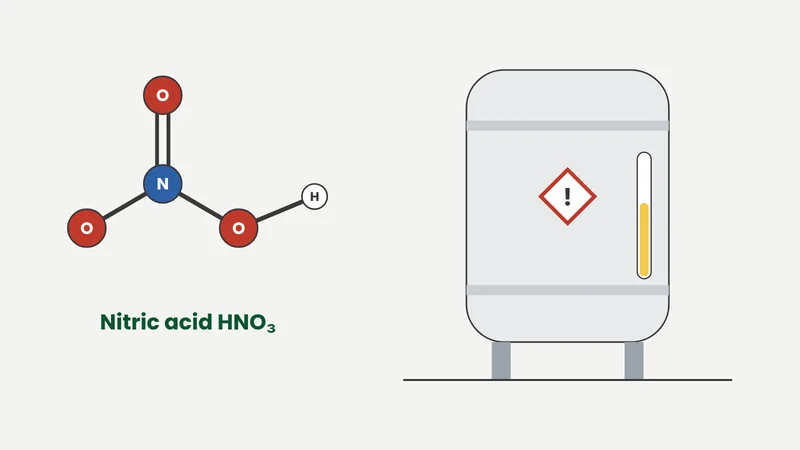
Short answer: nitric acid (HNO₃, CAS 7697-37-2) is a strong mineral acid and a powerful oxidiser. Most commercial supply is between about 55% and 68%. It is used for fertilisers, metal pickling and stainless steel passivation, etching and chemical synthesis. It is highly corrosive and reacts violently with many organic materials, so storage and segregation are critical.
Concentrations you will see
- Dilute grades (below about 50%) for cleaning, laboratory and some metal treatment uses.
- Commercial grades around 55–68%, the most common industrial supply. About 68% is the azeotrope with water: ordinary distillation cannot concentrate it further.
- Concentrated and fuming grades (above about 86%) for specialist chemical synthesis, with much stricter handling.
What it is used for
- Fertilisers: most nitric acid produced worldwide goes into nitrogen fertilisers.
- Metal pickling: removing scale and oxides from stainless steel, often mixed with hydrofluoric acid.
- Passivation: treating stainless steel to remove free iron and strengthen its protective chromium oxide layer, for example after fabrication or welding.
- Etching and cleaning: in electronics, metal finishing and equipment cleaning.
- Chemical synthesis: as a nitrating and oxidising agent in making dyes, pharmaceuticals and polymers.
- Laboratories: sample digestion and analysis.
Storage and handling (general guidance)
- Containers: use materials recommended in the SDS. Stainless steels such as 304L are common for concentrated acid; many plastics suit dilute acid only. Never store in ordinary carbon steel.
- Segregation: keep away from organic materials, solvents, fuels, wood and paper, bases, reducing agents and metal powders. Contact with organics can cause fire.
- Bunding and ventilation: store in bunded, ventilated areas; nitric acid fumes (nitrogen oxides) are toxic.
- PPE: acid-resistant gloves, face shield and goggles, and acid-resistant clothing; safety showers and eyewash nearby.
- Spills: contain and neutralise following the SDS; never use sawdust or other combustible absorbents.
Always follow the product's SDS and your site's chemical safety procedures.
Buying in Saudi Arabia
Nord Chemicals, part of Nordinfini, is a registered chemical trading, manufacturing and blending company headquartered in Dammam, serving nine industries across the Kingdom. For grades, pack sizes, documents and prices, see the catalogue at nordchemicals.com or email info@nordinfini.com.
Sources
- PubChem, Nitric acid (CID 944), properties and hazards.
- ASTM A967 / A380 (stainless steel passivation and cleaning practices), general reference.
Need this chemical in Saudi Arabia or the GCC?
Nord Chemicals supplies, manufactures and blends industrial chemicals from Dammam, for nine industries across Saudi Arabia and the GCC.
See Nord ChemicalsRelated articles
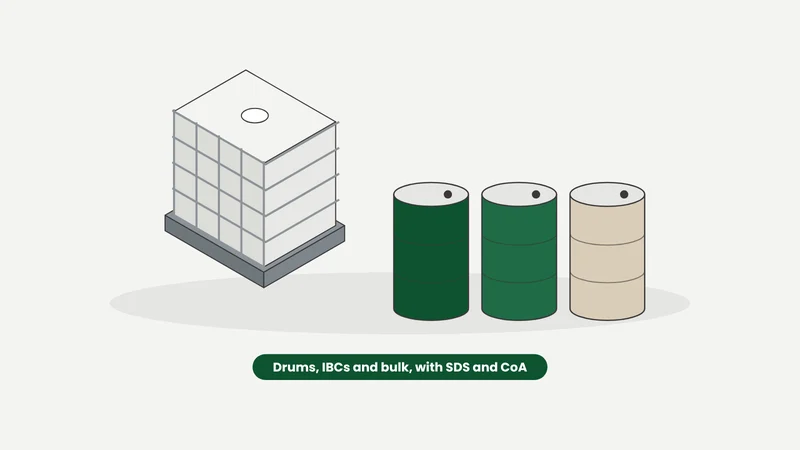
Buying industrial chemicals in Saudi Arabia: grades, documents and permits
What to check before you order: the right grade, the SDS and certificate of analysis, packaging, storage, and the import and release permits that apply to chemicals in the Kingdom.
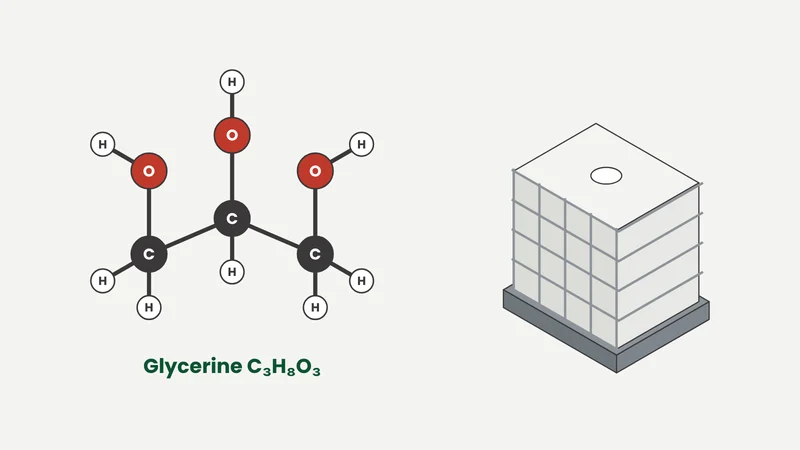
Glycerine grades explained: crude, technical and USP, and where each is used
Glycerine is in medicines, cosmetics, food, resins and drilling fluids, but not the same glycerine. A guide to grades, purity and choosing the right one.
Industrial ethanol: grades, uses and handling
Rectified, anhydrous or denatured? A clear guide to industrial ethanol grades, where each is used in manufacturing, cleaning and labs, and how to store it safely.