
Industrial ethanol: grades, uses and handling
Rectified, anhydrous or denatured? A clear guide to industrial ethanol grades, where each is used in manufacturing, cleaning and labs, and how to store it safely.
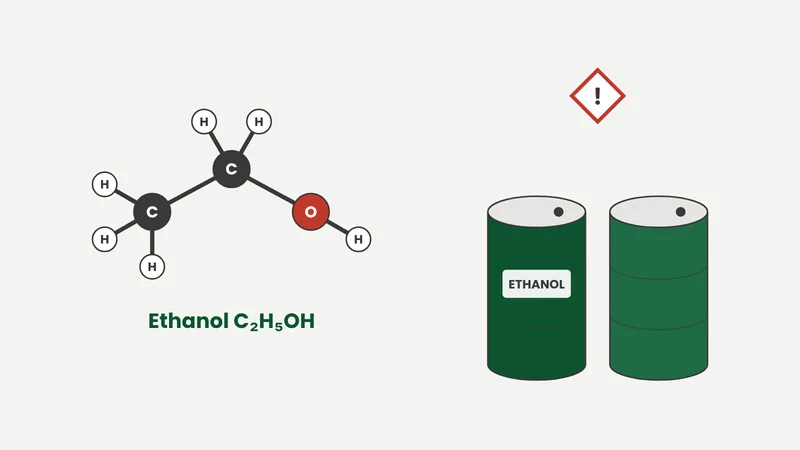
Short answer: rectified ethanol (about 95–96%) suits most solvent and sanitiser uses; anhydrous (absolute) ethanol (99.5% and above) is needed where water must be kept out; denatured ethanol contains additives that make it undrinkable and is the usual industrial solvent. All are highly flammable.
What ethanol is
Ethanol (ethyl alcohol, CAS 64-17-5, C₂H₅OH) is a clear, volatile liquid that mixes with water in all proportions. It boils at about 78 °C and has a flash point of around 13 °C, so it gives off flammable vapour at room temperature. It is transported as UN 1170 (ethanol or ethanol solution), Class 3.
The grades
Rectified (95–96%). Ordinary distillation cannot go beyond about 95.6% ethanol by weight, because ethanol and water form an azeotrope: a mixture that boils at a constant composition. Rectified ethanol sits at this point.
Anhydrous / absolute (99.5%+). Made by breaking the azeotrope, for example with molecular sieves. Used where water spoils the process: some pharmaceutical syntheses, extraction, analytical work and certain fuel blends.
Denatured. Ethanol with small amounts of denaturants (such as bittering agents or other solvents) so it cannot be drunk. Denaturant formulations vary, so check that the denaturant is acceptable in your process.
Pharmaceutical and laboratory grades. Meet pharmacopoeia or reagent specifications for purity and residues.
Where it is used
- Hand sanitisers and disinfectants (typically formulated at 60–80% alcohol)
- Pharmaceuticals: solvent, extraction and cleaning
- Personal care: perfumes and cosmetics
- Coatings and inks: solvent and thinner
- Laboratories: cleaning, extraction and analysis
- Chemical manufacturing: a feedstock for esters such as ethyl acetate
Storage and handling (general guidance)
- Store in a cool, ventilated flammables area, away from oxidisers and ignition sources; earth and bond containers during transfer.
- Use explosion-protected equipment in areas where vapour may collect.
- Wear eye protection and suitable gloves; follow the SDS for exposure limits and first aid.
- Keep containers closed. Ethanol absorbs water from the air, and anhydrous grades lose their spec if left open.
Regulation in Saudi Arabia
In the Kingdom, chemicals imported for industrial production go through import and release permits from the Ministry of Industry and Mineral Resources, and some substances face additional controls. Buy ethanol only from a licensed supplier who can show the grade, the permits and the paperwork for your intended use.
Buying in Saudi Arabia
Nord Chemicals, part of Nordinfini, is a registered chemical trading, manufacturing and blending company headquartered in Dammam, serving nine industries across the Kingdom. For grades, pack sizes, documents and prices, see the catalogue at nordchemicals.com or email info@nordinfini.com.
Sources
- PubChem, Ethanol (CID 702), physical properties.
- Ministry of Industry and Mineral Resources, Chemical release request service.
Need this chemical in Saudi Arabia or the GCC?
Nord Chemicals supplies, manufactures and blends industrial chemicals from Dammam, for nine industries across Saudi Arabia and the GCC.
See Nord ChemicalsRelated articles
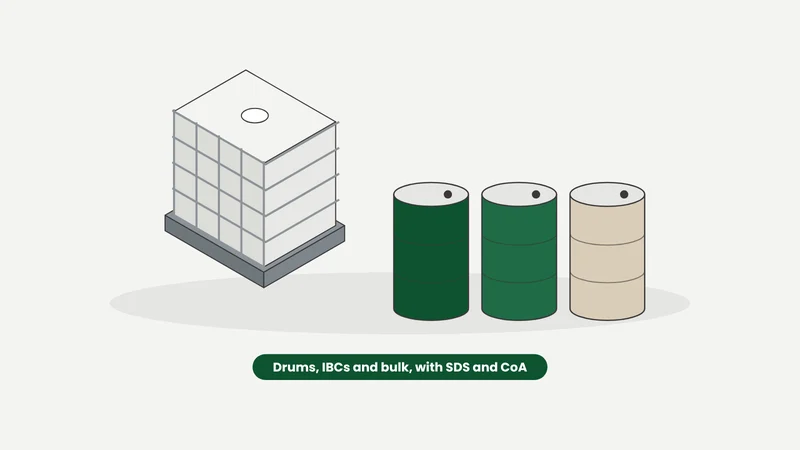
Buying industrial chemicals in Saudi Arabia: grades, documents and permits
What to check before you order: the right grade, the SDS and certificate of analysis, packaging, storage, and the import and release permits that apply to chemicals in the Kingdom.
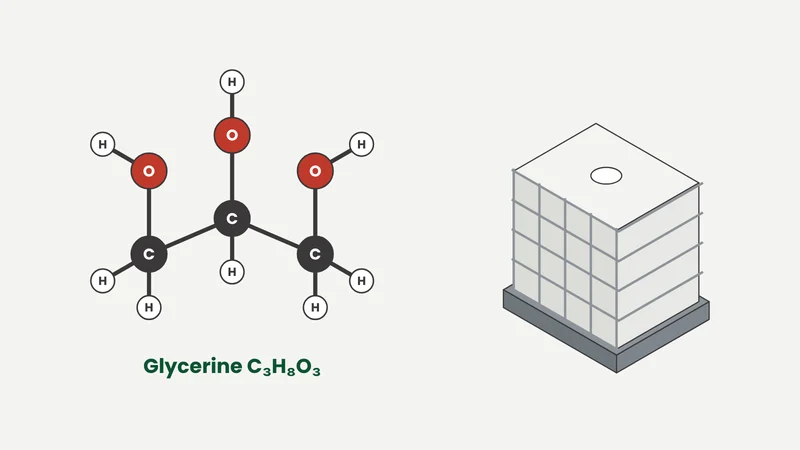
Glycerine grades explained: crude, technical and USP, and where each is used
Glycerine is in medicines, cosmetics, food, resins and drilling fluids, but not the same glycerine. A guide to grades, purity and choosing the right one.
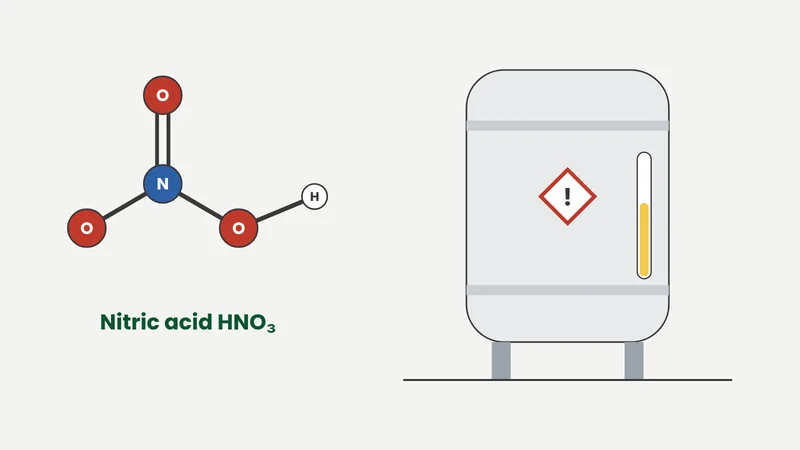
Nitric acid: concentrations, industrial uses and safe storage
From fertilisers to stainless steel passivation: what nitric acid is used for, the common commercial concentrations, and how to store and handle a strong oxidising acid.