
Mosque carpets: how to specify saff carpet for a prayer hall
Row alignment to the qibla, row depth, construction, fibre, pile and maintenance: what makes a mosque carpet right for daily prayer for years.
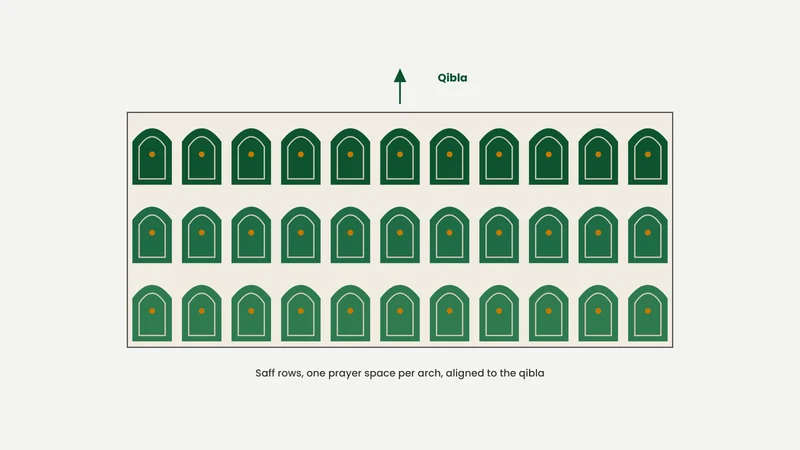
Short answer: a mosque carpet is a saff carpet: patterned in rows that are set out exactly square to the qibla, so worshippers stand in straight lines. It should be dense cut pile that is comfortable to kneel and prostrate on, made in a construction that holds its pattern and colour through daily traffic, usually Axminster or high-quality machine-tufted broadloom.
1. Set out the rows first
Everything starts with the qibla direction. The carpet design is drawn so each row (saff) runs exactly perpendicular to it, and the installer sets out from a surveyed line, not from the walls, which are often not square to the qibla. Agree:
- Row depth, the front-to-back depth of each prayer row. It is set by the design and the expected congregation, commonly around 1.2 m; confirm it with the mosque's architect.
- Row pattern, from a simple band to a full mihrab-arch motif per worshipper.
- Where rows start and stop around columns, the mihrab and the minbar.
2. Choose the construction
- Axminster weaves each tuft individually, so arches, borders and many colours come out crisp and stay crisp. It is the classic choice for grand mosques and heavy daily use.
- Machine-tufted broadloom with a printed or yarn-dyed pattern suits neighbourhood mosques and tighter budgets.
- Hand-tufted works for custom areas, such as a decorative mihrab zone or a VIP prayer room.
3. Pile, density and fibre
Worshippers kneel and place their foreheads on the carpet, so comfort and hygiene matter as much as wear.
- Cut pile, dense and medium height, is comfortable and keeps a uniform look. Very tall pile crushes and is harder to keep clean.
- Wool or wool-rich blends (such as 80% wool / 20% nylon) feel warm, resist soiling and are naturally flame-resistant.
- Solution-dyed nylon is tough and easy to clean with strong agents, a good choice for very busy mosques.
4. Fire and safety
Treat a prayer hall as an assembly space. Ask for fire test evidence for the exact carpet (for example critical radiant flux to ASTM E648 and the pill test to ASTM D2859, or EN 13501-1) and follow the Saudi Fire Code (SBC 801) and civil defence requirements for the project.
5. Installation and maintenance
- Use a firm underlay or direct glue-down as the design requires; seams should run between rows, never across a worshipper's place.
- Plan daily vacuuming, regular deep cleaning, and quick spot cleaning.
- Keep spare carpet from the same batch for repairs.
Where Nord Floors fits
We design and produce custom saff carpets in Axminster and machine-tufted constructions, set out the rows to the qibla and install them. Send us the mosque plan and qibla line and we will return a row layout and design options. Start with Axminster carpets or the carpet selector.
Sources
- Industry practice for saff carpet design and installation.
- EN 1307; ASTM E648; ASTM D2859; Saudi Building Code SBC 801.
Specify your carpet in a few taps
Pick the room, traffic and look. We suggest the construction, pile and quality, and give you the spec text.
Open the carpet selectorRelated articles

Perforated panels and CRAC airflow: how many do you really need?
Too few perforated panels starve the racks; too many waste cold air. Here is how to size them from the cooling units and the IT load, step by step.
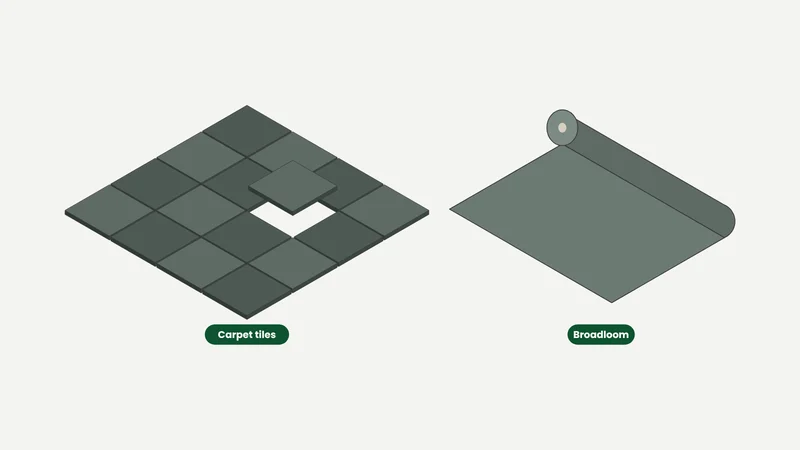
Carpet tiles or broadloom? Choosing office carpet for a raised floor
On a raised access floor the answer is usually carpet tiles — but not always. How access, wear, acoustics and design decide between tiles, broadloom, Axminster and hand-tufted.
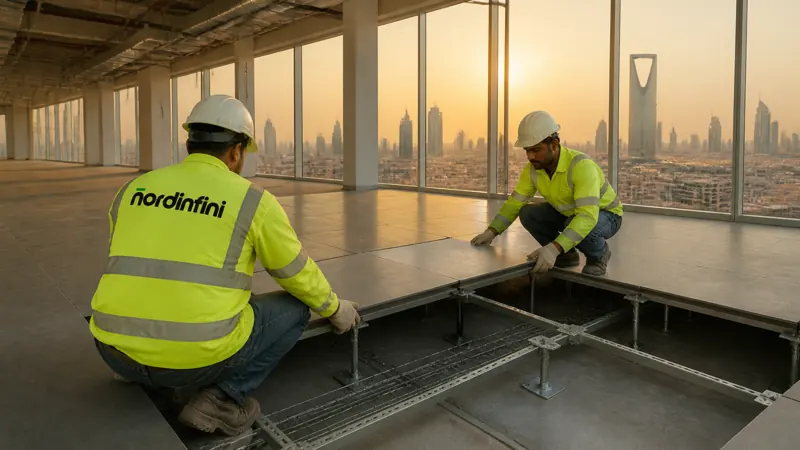
How to choose a raised access floor: a practical guide for Saudi projects
Panel type, load grade, finish and finished floor height — the four decisions that decide whether a raised floor works for its whole life, and how to get each one right.