
Cut pile vs loop pile: choosing carpet texture for offices, hotels and mosques
Loop pile wears like iron, cut pile feels like luxury, and cut-and-loop does both. Here is how each behaves under real traffic, and where each belongs.
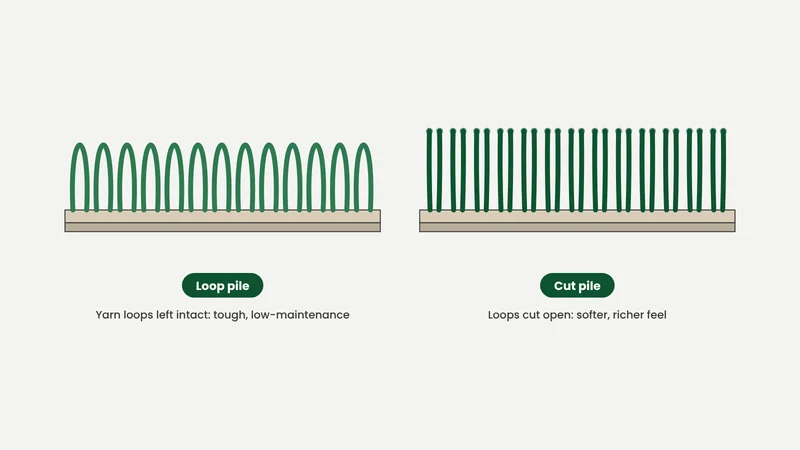
Short answer: loop pile for busy offices and corridors, because it resists crushing and hides wear; cut pile for comfort and luxury in hotels, homes and prayer halls; cut-and-loop when you want pattern and texture in a single colour.
What "pile" means
The pile is the yarn standing up from the backing, the part you walk on. When a tufting needle or loom forms a tuft, it makes a loop. Whether that loop is left whole or cut changes how the carpet looks, feels and wears.
Loop pile
The loops are left uncut. Level loop has every loop at the same height; multi-level loop uses two or more heights to make a sculpted texture.
- Durability: excellent. Loops bend and recover, so they resist crushing under feet and chair castors.
- Look: tailored and textured; footprints and vacuum marks hardly show.
- Watch out for: snags. A pulled loop can run, so avoid loop pile where pets' claws or sharp castors could catch it, and trim snags, never pull them.
- Best for: offices, corridors, meeting rooms, carpet tiles on raised floors.
Cut pile
The tops of the loops are sheared off so each tuft stands as two yarn ends.
- Feel: soft and luxurious.
- Look: rich and uniform, but it shows shading: as tufts lean in different directions, areas look lighter or darker. This is a natural property, not a fault.
- Styles: velvet/plush (dense, short, very smooth), Saxony (twisted tufts, smooth surface), frieze (highly twisted, curly, hides footprints), shag (long and decorative).
- Best for: hotel rooms and suites, homes, majlis rooms, mosques and prayer halls, where people sit and kneel on the carpet.
Cut and loop
A mix of cut and looped tufts in one carpet. The difference in how they reflect light creates a pattern even in one colour.
- Best for: hotel corridors, offices that want warmth and pattern, feature areas.
What matters more than pile type
Texture is only part of the story. A loose, tall cut pile will crush faster than a dense loop, and a dense cut pile can outlast a cheap loop. Compare:
- Pile weight and density. More yarn, packed tighter, wears better.
- Fibre. Solution-dyed nylon for hard-working commercial floors; wool or wool-rich blends for premium woven and hand-tufted carpets.
- EN 1307 use class. Class 31, 32 or 33 tells you the commercial traffic level a carpet has been tested for. Most offices need 32 or 33.
- Castor chair rating if office chairs will roll on it.
Quick recommendations
| Space | Pile |
|---|---|
| Open-plan office, raised floor | Loop pile carpet tiles |
| Meeting rooms, executive offices | Loop or cut-and-loop |
| Hotel corridors | Cut-and-loop or patterned Axminster |
| Hotel rooms and suites | Cut pile |
| Majlis and reception rooms | Dense cut pile (hand-tufted or Axminster) |
| Mosques and prayer halls | Dense cut pile saff carpet |
Use the carpet selector to match pile, construction and use class to your room, or see the terms in our glossary.
Sources
- EN 1307, Textile floor coverings: classification (use classes 31–33).
- Industry practice for pile constructions and appearance retention.
Specify your carpet in a few taps
Pick the room, traffic and look. We suggest the construction, pile and quality, and give you the spec text.
Open the carpet selectorRelated articles

Perforated panels and CRAC airflow: how many do you really need?
Too few perforated panels starve the racks; too many waste cold air. Here is how to size them from the cooling units and the IT load, step by step.
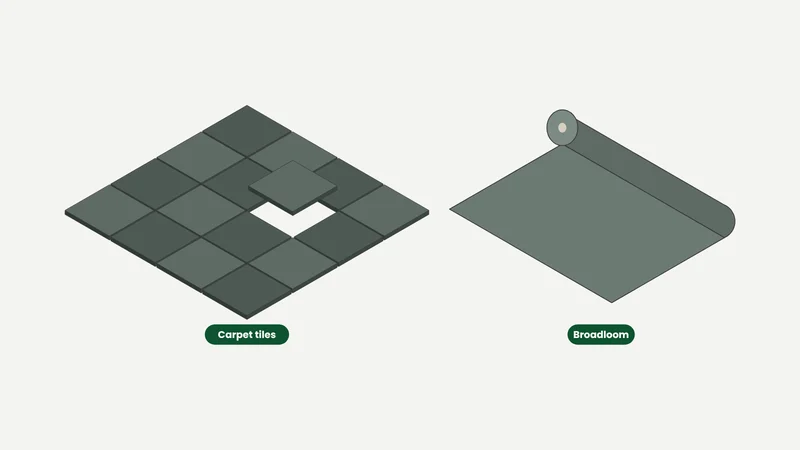
Carpet tiles or broadloom? Choosing office carpet for a raised floor
On a raised access floor the answer is usually carpet tiles — but not always. How access, wear, acoustics and design decide between tiles, broadloom, Axminster and hand-tufted.
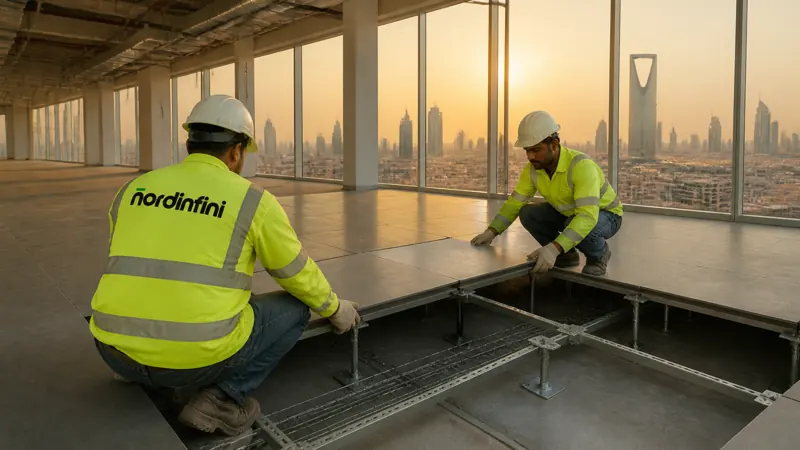
How to choose a raised access floor: a practical guide for Saudi projects
Panel type, load grade, finish and finished floor height — the four decisions that decide whether a raised floor works for its whole life, and how to get each one right.